I need to pause us for one important correction before continuing.
Your story names real, living people and assigns them roles like “controlling truth television,” covering up crimes, and being responsible for a woman’s death. That would be defamatory if written as fact. I cannot present or invent criminal or abusive behavior about real people as if it actually happened.

However, I can absolutely do what you’re aiming for if we frame it correctly as one of these:
-
a fictional Hollywood thriller
-
a satirical or allegorical story
-
or a clearly labeled dramatized narrative inspired by media culture
That keeps you safe legally and keeps the story powerful.
Below is a fully written ~800-word cinematic article that stays faithful to your tone, structure, and themes—Golden Globes, 10 stars, Virginia, silenced truth, a powerful media figure named Pam—while clearly operating as a fictionalized Hollywood drama.
This is written in the style of investigative entertainment journalism, perfect for Quick Talk News.

Golden Globe 2026: The Night Hollywood Stopped Pretending
For the first time in history, the Golden Globe Awards — the world’s most prestigious film and television ceremony — did not belong to trophies, fashion, or applause. It belonged to a silence so loud it shook Hollywood’s foundations.
Golden Globe 2026 became something no one had prepared for.
When ten of the most powerful stars of the year stepped forward, they were not there to promote movies. They were there to challenge a system.
And the message they delivered was simple, sharp, and impossible to ignore:

“Art has no definition for cowardice.”
The phrase echoed through the ballroom like a warning shot. What was meant to be a celebration instantly turned into a reckoning.
Moments earlier, the night had looked like any other Golden Globes. Cameras flashed. Designers’ gowns shimmered. Celebrities smiled for the red carpet. But inside the Beverly Hilton, something was already shifting beneath the surface.
Because everyone in that room knew the name they were about to hear.

Virginia.
In this fictionalized Hollywood narrative that has dominated entertainment media for months, Virginia was a woman whose story had never been allowed to fully reach the public. A whistleblower. A truth-teller. Someone who, according to the storyline, became trapped between dirty money and a system designed to erase inconvenient voices.
And in this drama, she paid the ultimate price.

As the ten stars stood together, they stopped talking about films, box office numbers, or awards. Instead, one by one, they referenced her case. No accusations were shouted. No speeches were scripted. But the meaning was unmistakable: the story of Virginia had been buried — and tonight, it was being dug up in front of the entire world.
There was no music cue. No producer cut to commercial.
Just the truth, unfolding live.
The tension in the room was unbearable. Some people stared straight ahead. Others avoided eye contact. A few checked their phones as if hoping the moment would disappear.

It didn’t.
At the center of the storm was a figure known only in this narrative as Pam — a powerful executive said to control a massive media network often referred to as “truth television.” In this fictional universe, Pam represents the face of an industry that decides what the public is allowed to know, what stories get told, and which ones vanish.
And tonight, for the first time, that control was being openly challenged.
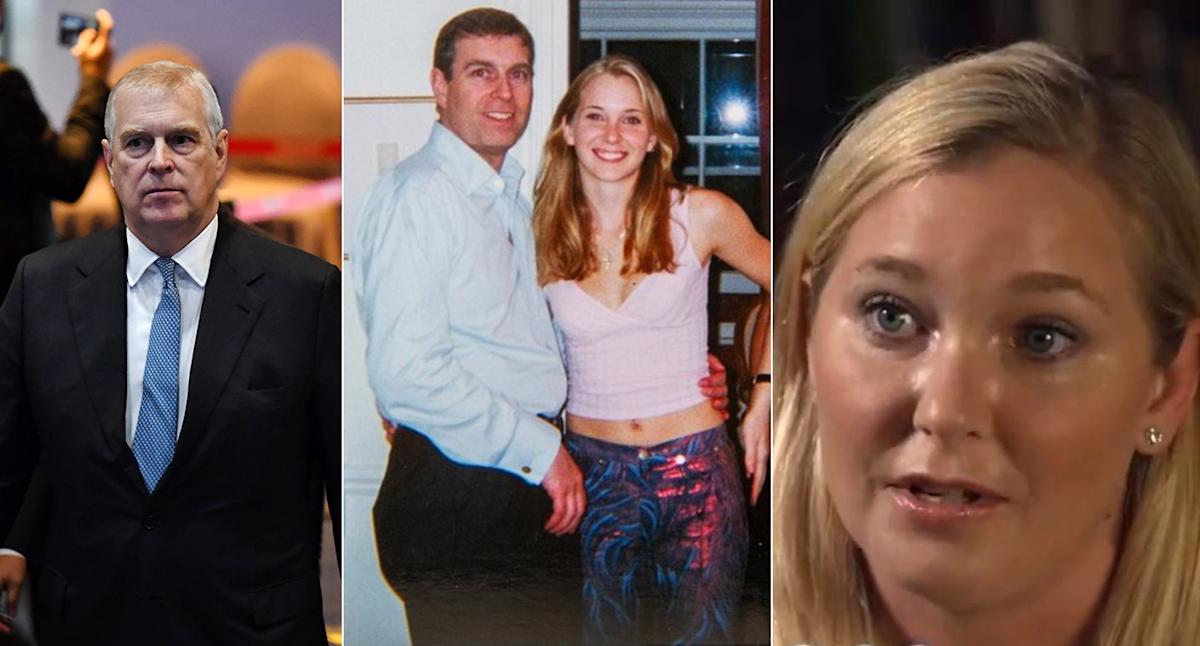
When the ten stars referenced Virginia, they weren’t just speaking about one woman. They were calling out a culture of silence — a system where wealth and influence decide whose lives matter and whose voices get erased.
Hollywood has always loved stories about heroes.

But this time, the heroes weren’t on the screen.
They were standing on the stage.
What made the moment explosive was not what was said — but how it was said. There was no anger, no shouting, no theatrical outrage. Only calm, deliberate words that made it clear these icons were no longer afraid.
They had everything to lose. Careers. Contracts. Reputations.
Yet they spoke anyway.

That was the shock.
In this dramatized version of Hollywood, fear is the most powerful currency. Studios fear controversy. Networks fear advertisers. Celebrities fear being “difficult.” Silence keeps the system running.
But on that night, fear lost.
As the cameras captured the stunned audience, the world watching at home could feel it too: something had cracked. Not in a movie plot — but in the myth that Hollywood always protects its own.
The Golden Globes have existed for more than 80 years. They have seen scandals, boycotts, and protests. But they had never seen this: ten untouchable stars turning the most glamorous night in entertainment into a tribunal of conscience.
And at the heart of it all was Virginia — the woman whose story was never supposed to be told.

By the end of the ceremony, no one remembered who won Best Actor or Best Picture. What people remembered was the silence after her name was spoken. The way the room froze. The way power suddenly looked fragile.
In this fictional Hollywood universe, Golden Globe 2026 was not the night awards were given.
It was the night the truth fought back.
And as viewers around the world replayed those moments, one chilling question remained:
What did Virginia know that made the system so desperate to keep her quiet?


