
BREAKING: Missing Deaf Teen La’Niya “Lala” Clark Found Dead After Weeks-Long Search

The winter air in Wilkes-Barre had a way of settling into the bricks and pavement.
February nights felt quiet and ordinary, the kind where most people closed their curtains and trusted the dark to pass without incident.
On Thayer Street, outside a garage behind a familiar house, something unthinkable waited to be found.
Fifteen-year-old La’Niya Clark had been missing for more than a month.
To the world, she was a name on a flyer, a photograph shared online, a face on “missing” posts that flickered past on screens.
To the people who loved her, she was “Lala.”

Lala was hearing-impaired, a deaf teenager in a world that did not always slow down for her.
She typically wore hearing aids, small devices that bridged the distance between her and the sounds others took for granted.
Her family said she was kind, protective, and fearless—full of energy and personality.
She did not move through life quietly, even if the world sounded different to her.
Her presence lit up rooms, not with volume, but with expression.
Her dreams for the future were real and growing, stretching beyond the walls of the home she knew.
On January 17, she left her home in South Wilkes-Barre and didn’t come back.
Hours became a day, then two, then a week, then many more.
Each sunrise without her felt like a tightening knot in the chest of those waiting.
Her family reported her missing.
They described her vulnerabilities clearly—her age, her hearing impairment, her need for hearing aids.
They expected urgency.
But as days turned into weeks, they felt that urgency was missing.
An Amber Alert was never issued.
Search efforts, in their eyes, never matched the level of danger they believed she was in.
They went public with their frustration.
They raised their voices in interviews, on social media, in conversations with anyone who would listen.
They asked the question no family ever wants to ask: “Why does it feel like no one is looking for her the way they should.”
While they waited, they searched on their own.
They made calls, shared flyers, knocked on doors, clung to rumors and faint leads.
Hope became something both fragile and stubborn.
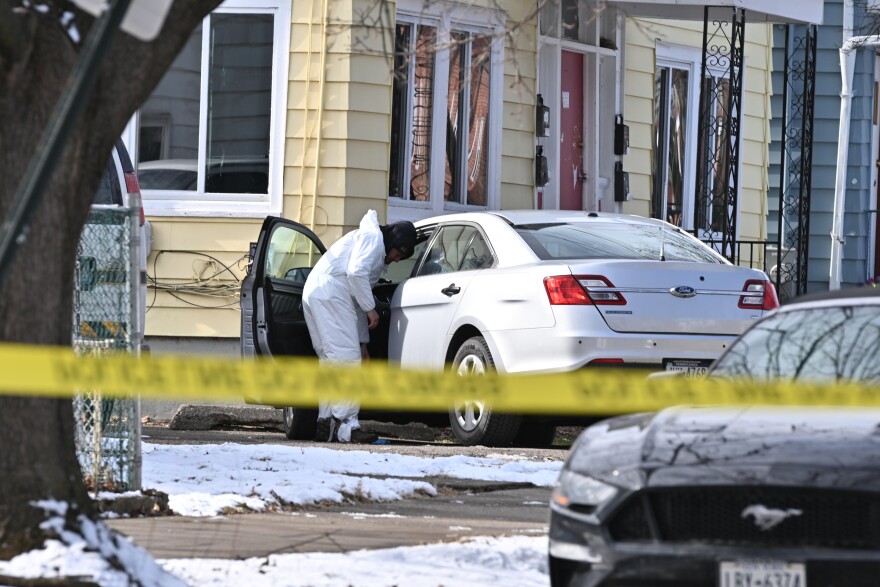
Then, on February 21, officers with the Wilkes-Barre City Police Department were called to Thayer Street.
A report had come in about a body found outside a garage.
The garage reportedly belonged to Lala’s adoptive parents.
When officers arrived, they found a scene that would haunt them.
According to a search warrant, the body was lying face down.
She was naked, positioned behind a vehicle, with suspected signs of trauma.
Investigators noted that her face, back, and arms appeared purple in color.
They believed it could indicate bruising.
Cuts were also documented on her body.
Around her right wrist, a rope-like item was found.
Nearby, a pair of scissors lay among other items collected as evidence.
Surveillance cameras from surrounding properties were also seized.
An autopsy was conducted the following Tuesday morning.
At that point, the cause of death had not yet been determined.
The silence of that uncertainty settled heavily over the people waiting for answers.
For the family, the news came like a blow to the chest.
They had been clinging to the idea that she might still come home.
Now, the word “missing” was replaced with “deceased.”
In that single shift of language, the future they imagined for her collapsed.
The girl who once talked about building a life of her own was now the subject of a criminal investigation.
Her dreams would never get the chance to unfold.
Loved ones remembered her not as a case file, but as a person.
They said she was deeply loved within her community.
They described how she looked out for others, how she was protective even at her young age.
Fearless, they called her.
Not because she never felt fear, but because she moved through life without letting it stop her.
She met the world with energy and personality that demanded to be seen.
In the weeks when she was missing, every unanswered phone call felt heavier.
Every knock on the door carried the potential to be good news or the worst kind of news.

Her family felt, again and again, that their pleas weren’t being matched with urgency.
After her body was found, their grief mixed with anger.
They gathered with supporters outside police headquarters.
They carried signs, tears, and questions.
They demanded to know why Amber Alerts seem to come quickly for some children but not for others.
They asked why it took more than a month for her to be found, and why she was found so close to home.
They questioned whether more could have been done sooner.
Authorities, for their part, issued careful statements.
They said there was no indication of ongoing danger to the public.
They emphasized that the investigation remained active.
No arrests had been publicly announced.
No suspects had been named in official releases.
The case sat in that tense place between discovery and resolution.
For investigators, the garage and the ground behind it became a map of clues.
Every item near her body was documented and bagged.
Every camera angle in the neighborhood became a potential timeline.
They would review footage frame by frame.
They would analyze the rope-like item found around her wrist.
They would ask whether the scissors nearby played any role in what happened.

They would examine phone records, social media, and movements in the weeks before she disappeared.
They would try to reconstruct her last known steps.
They would attempt to answer questions that now defined the case.
Meanwhile, her community tried to hold on to who she was before all of this.
They remembered her as a girl with big plans, not just a teenager lost in mysterious circumstances.
They talked about her kindness, her protectiveness, her fierce little spark.
Teachers recalled the way she navigated school as a hearing-impaired student.
They remembered how she learned to advocate for herself in hallways and classrooms not designed with her in mind.
They remembered her resilience.
Friends remembered the way she communicated with her hands, her expressions, her body language.
They remembered the jokes, the secrets, the small rebellions that make adolescence what it is.
They remembered how she made them feel understood.
In a world that often overlooks disabled voices, Lala’s story cut deeply.
She was vulnerable in ways the world should have recognized and protected.
Her disappearance should have rung louder alarms.

Her family spoke of her dreams.
She had talked about what she wanted to do, who she wanted to become.
She did not see her life as something small.
When they stood outside police headquarters, they weren’t just demanding answers.
They were demanding acknowledgement that her life mattered enough for every resource, every tool, every alert.
They were saying, “She deserved more.”
The words “no indication of ongoing danger to the public” landed strangely for some.
For those who loved her, the danger had already done its worst.

The comfort offered to the public felt thin compared to the devastation in one family.
The garage, the rope-like item, the bruising, the cuts—all of those details became part of a larger story.
A story about a deaf teenager who went missing and was later found in a place that should have felt familiar.
A story with more questions than answers.
People asked who last saw her alive.
They asked how long she had been where she was found.
They asked who might have known, and who might still be hiding the truth.
The autopsy report, still pending a final conclusion, would eventually provide some clarity.
It might reveal how she died.
It might narrow down the possibilities of what happened in her final hours.
But even with those answers, there would still be grief.
Grief that she was found alone, outside, in the cold.
Grief that her story ended far from the life she envisioned.
Lala’s hearing impairment shaped the way she moved through the world, but it did not define her entire identity.
She was also a teenager figuring out who she wanted to be.
She was also a girl laughing with her friends, rolling her eyes at small annoyances, dreaming big.
Her story now lies at the intersection of many hard truths.
The vulnerability of missing children and teens.
The gaps that can appear in early investigations.
The particular risks faced by disabled youth.
The pain of families who feel unheard until it’s too late.
The relentless need for accountability when a child is found dead.
In the coming months, detectives will keep working.
They will follow leads until they go cold or turn into something solid.
They will prepare reports for prosecutors if evidence points clearly enough in one direction.
The community, meanwhile, will continue saying her name.
They will hold vigils, share posts, stand outside buildings with signs.
They will refuse to let her story fade into the background noise of the news cycle.
Because La’Niya “Lala” Clark was more than the way she was found.
She was more than the rope around her wrist, more than the bruises, more than the location of a garage.
She was a daughter, a friend, a deaf teenager with fire in her spirit and plans for her future.
Her family’s grief is deep, but so is their love.
That love is now woven into every call for justice, every demand for answers, every simple statement that her life mattered.
They carry her forward in memory, refusing to let the last chapter of her story be written only by those who hurt her.
On the day her body was found, winter air hung heavy over Thayer Street.
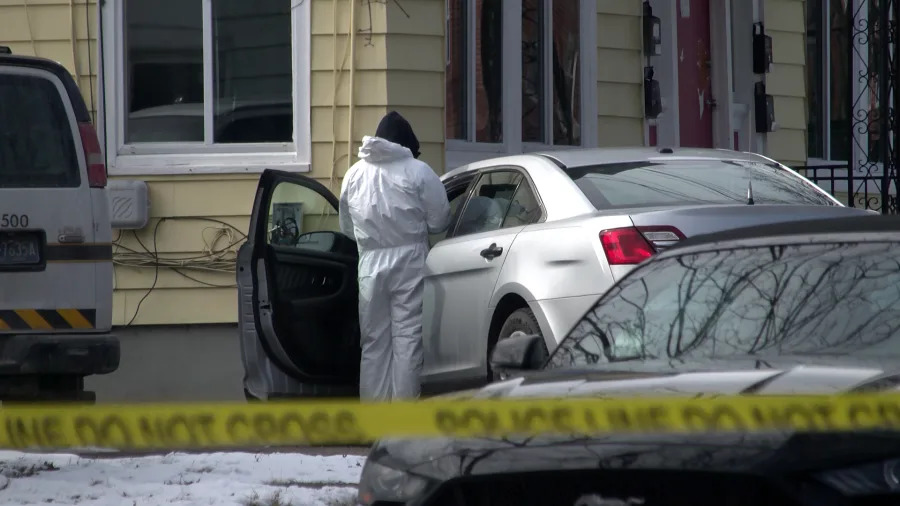
Police tape fluttered in a cold breeze, and strangers slowed their cars to stare in grim curiosity.
Yet beneath the noise, there was something quieter—an insistence that this cannot be where the story ends.
La’Niya “Lala” Clark was fifteen.
She was fearless and kind and fiercely alive.
And even now, after all that has been taken from her, her story continues to move people—to grieve, to question, to demand better.


